Queer Places:
Eton College, Windsor SL4 6DW, United Kingdom
University of Cambridge, 4 Mill Ln, Cambridge CB2 1RZ
Winchester College, College St, Winchester SO23 9NA, United Kingdom
Eton Parish Cemetery, Windsor SL4 6ET, United Kingdom
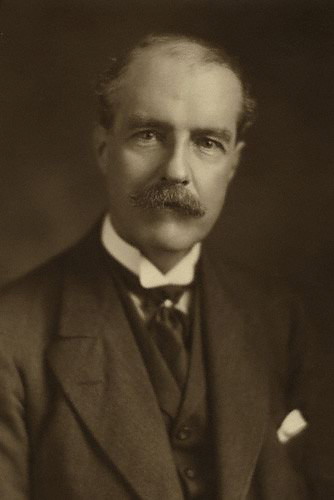 Sir Henry Babington Smith (January 29, 1863 – September 29, 1923) was a distinguished senior British civil servant, financial administrator, and director
of the Bank of England whose life bridges elite Victorian academic networks and high-level imperial governance.
Sir Henry Babington Smith (January 29, 1863 – September 29, 1923) was a distinguished senior British civil servant, financial administrator, and director
of the Bank of England whose life bridges elite Victorian academic networks and high-level imperial governance.
Born at Riverbank in Putney, London, he was the sixth son of the eminent lawyer and mathematician Archibald Smith, FRS, of Jordanhill and Riverbank, and
Susan Emma Parker, daughter of Sir James Parker of Rothley Temple. His academic trajectory was exceptionally decorated; he was educated at
Eton College—where he later served as a fellow—and proceeded to Trinity College, Cambridge, in 1882. At Cambridge, he achieved First Class honors in both
parts of the Classical Tripos, earned the prestigious Browne Medal three times consecutively (1884–1886), secured the Chancellor's Classical Medal and the
Winchester Reading Prize in 1886, and was elected a Fellow of Trinity in 1889. True to his intellectual pedigree, he was also a member of the elite and
secretive Cambridge Apostles, a society that profoundly shaped his social and intellectual worldview
alongside his brothers Arthur Hamilton Smith and
James Parker Smith, who were also Apostles.
Smith's professional career began briefly in education before pivoting rapidly into the highest echelons of imperial and financial administration. After
starting as an assistant master at Winchester College and an examiner in the Education Office, he transitioned into high-level government service in 1891
as principal private secretary to the Chancellor of the Exchequer, George Goschen. His administrative prowess led to roles of increasing international
weight, including serving as secretary to the British delegates at the Brussels Monetary Conference in 1892. In 1894, he traveled to India as private
secretary to the Viceroy, the Earl of Elgin—a pivotal posting that cemented a lasting personal and dynastic alliance. For his services in India, he was
appointed a Companion of the Order of the Star of India in 1897. Following a brief stint representing the Treasury in Natal during the South African War in
1899, Smith assumed prominent international financial posts, becoming the British representative on the Council of Administration of the Ottoman Public
Debt in 1900 and its president the following year. Returning to Britain, he served as secretary to the General Post Office from 1903 to 1909, during which
time he represented Britain at major international postal and telegraph congresses in Rome, Berlin, and Lisbon, earning a Companion of the Order of the
Bath and later a Knight Commander designation. In 1909, he moved to Constantinople as the founding president of the National Bank of Turkey. He famously
declined the prestigious post of Governor of Bombay because it carried a peerage, advising his children that no wise man burdens a large family with such
empty trappings. During the First World War, Smith's financial expertise was heavily tapped for the war effort; he participated in the Anglo-French
Financial Commission to the United States in 1915, chaired civil service and currency committees, acted as assistant minister plenipotentiary in the U.S.,
and was appointed a director of the Bank of England in 1920, receiving a Knight Grand Cross of the Order of the British Empire that same year alongside
earlier honors including the Companion of Honour.
In his personal life, Smith married Lady Elizabeth Mary Bruce, the eldest daughter of the 9th Earl of Elgin, on 22 September 1898 in Simla during his
tenure as the Viceroy's secretary. The couple had nine children—four sons and five daughters—whose descendants took the double-barreled surname Babington
Smith, establishing their family homes at Chinthurst in Wonersh and later Vineyards in Saffron Walden. Sir Henry passed away on 29 September 1923 at the
age of sixty and was buried in the Eton Parish Cemetery in Berkshire.
Sir Henry Babington Smith's primary historical connection to queer history lies through his membership in the Cambridge Apostles. The
Apostles—officially known as the Cambridge University Moral Sciences Club—has a storied and well-documented history from the late 19th through the mid-20th
centuries as an intellectual incubator that frequently fostered homosocial and homoerotic bonds, as well as providing an early, accepting intellectual
environment for men who loved men. While Victorian discretion often veiled the private lives of its nineteenth-century members, the society's ethos of
"higher shibboleths" and intense emotional and intellectual intimacy among men laid the groundwork for the more explicitly queer networks that later
characterized the Bloomsbury Group and subsequent generations of Apostles. Furthermore, his inclusion within this elite network intersects with a broader
web of Victorian and Edwardian homosocial institutions, elite public school cultures at Eton and Trinity, and homosocial administrative circles in imperial
service where same-sex friendships and mentorships played a central role in the personal and professional lives of Victorian elites.
References:
Other references:
- Bushnell, George H. Sir Henry Babington Smith, G.B.E., C.H., K.C.B., C.S.I., M.A., 1863–1923, Civil Servant & Financier. St Andrews, 1942. (Privately printed for Lady Elisabeth Babington Smith).
- Who Was Who (1916–1928): Contains the official biographical entry for Sir Henry Babington Smith.
- Dictionary of National Biography (DNB) & Oxford Dictionary of National Biography (ODNB): References within the biographical entries of related figures, including his father Archibald Smith, his brother Arthur Hamilton Smith, his father-in-law the 9th Earl of Elgin, and contemporary academic circles such as M. R. James.
- Alumni Cantabrigienses: Compiled by J. A. Venn, containing the formal university admission, scholarship, and graduation records for Henry Babington Smith, his brother James Parker Smith, and his brother Arthur Hamilton Smith at Trinity College, Cambridge.
- Eton School Lists: Historical records detailing his enrollment and tenure as an Eton scholar and later fellow.
- Winchester College Register: Documentation covering his brief tenure as an assistant master at Winchester College.
- Trinity College Library, Cambridge (Archives): Holds the formal Papers of Sir Henry Babington Smith (catalogue reference covering his correspondence, account books, undergraduate notebooks, and personal photographs, alongside related family papers).
- The National Archives (UK): Records concerning his official governmental capacities, including his appointments at the Treasury, the General Post Office, the Ottoman Public Debt Council, the National Bank of Turkey, and diplomatic missions to the United States and India.
- The London Gazette: Official notifications regarding his civil service appointments, wartime commissions, and state honors (including his CSI, CB, KCB, CH, and GBE).
- Civil Registration and Census Records: Birth, marriage (including records of his 1898 marriage in Simla, India to Lady Elizabeth Mary Bruce), and death indexes managed by the General Register Office (GRO) for England and Wales.
Support this project
This website is a passion project researched, developed, and funded entirely by me. If you find the content valuable and would like to help support the ongoing research and hosting costs, any contribution is deeply appreciated.
Thank you for keeping this independent resource alive!
My books on Amazon: Elisa Rolle's books
BACK TO HOME PAGE
